
In every project, the factor of glass is far more than just “transparent”.
It serves as an energy barrier, an aesthetic element, and, more importantly, a crucial decision pertaining to long-term comfort and operational costs.
We often face a choice: mature and reliable insulating glass, or high-performance vacuum glass?
To make the wisest choice, we need to return to the fundamentals and understand the essential differences between the two technologies from the perspective of heat transfer mechanism.
Two structures, two logics
- Insulated glass: heat insulation through gas layer
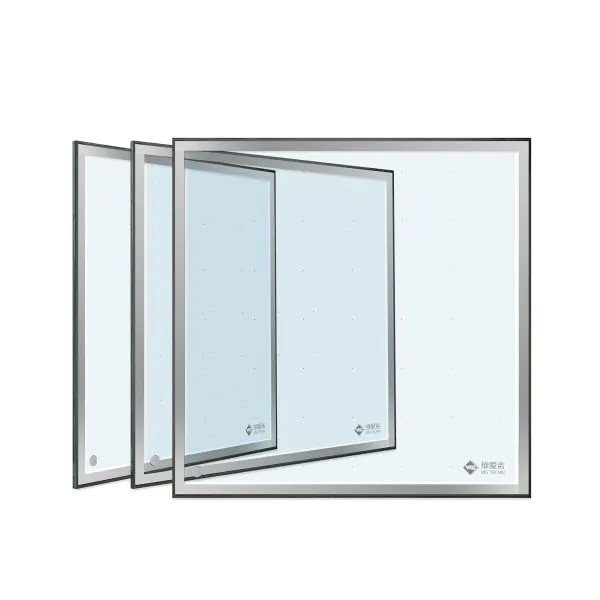
Structure: Two or more pieces of glass, separated by effective supports, are bonded and sealed around the edges to form a dry gas space.
Heat transfer mechanism: Its heat transfer process is primarily composed of radiative and gaseous heat transfer (conduction and convection). Its energy-saving property is achieved by reducing heat conduction through this “dry and non-convective air layer”.
- Vacuum glass: insulation through the vacuum layer
Structure: Two flat glass panes are separated by supports and sealed around the edges to form a vacuum chamber. The vacuum pressure should not exceed 1 Pa, while the pressure for VIG vacuum glass can be controlled at 0.1 Pa to 0.01 Pa or even lower.
Heat transfer mechanism: Its heat transfer process consists of radiation heat transfer, support heat transfer, and residual gas heat transfer. As vacuum environment greatly inhibiting gas heat transfer, the core challenge lies in controlling the heat transfer between the support and residual gas.
Core insight: Both require the use of low-emissivity glass to reduce radiative heat transfer. However, the fundamental difference lies in that insulating glass “optimizes” gas heat transfer, while vacuum glass “eliminates” gas heat transfer.
Performance boundaries revealed by data
- Ultimately, theory needs to be verified by data. Under the same conditions of glass substrates, the performance differences between the two types of glass are significant:
- The path to optimize the performance of insulating glass:
Research indicates that as the argon filling rate increases, the heat transfer coefficient of insulating glass decreases linearly.
The response of coated insulating glass to argon gas filling is more obvious.
However, the thickness of the gas layer has an optimal range, rather than being as thick as possible
- Performance of vacuum glass:
The conclusion clearly states that the thermal insulation performance of vacuum glass is superior to that of insulating glass.
This data tells us that there is a limit for the performance of insulating glass, while vacuum glass opens up a new dimension of performance.
- What kind of glass do you need for your project?
Now, let’s turn theory and data into direct insights for your project. Please consider the following scenarios and reflect on your real needs:
Scenario 1: Pursuit of the supreme architectural aesthetics, expecting a light and transparent facade.
Pain point: Traditional insulating glass requires increased thickness and air layer to enhance performance, resulting in a bulky appearance and limiting design freedom.
Decision Guidance: VIG Glass, leveraging the vacuum technology from Super Tech New Materials (stock code: 688398), offers a thinner glass structure with superior thermal insulation performance compared to insulating glass. Choosing it is to unleash your design imagination, achieving full potential of aesthetics.
Scenario 2: Projects involve passive architectures, zero-energy buildings, or high-end renovations with stringent requirements for energy consumption.
Pain point: Even for argon-filled coated insulating glass, its heat transfer coefficient may still fail to meet the highest standards, becoming the “final weak link” in building energy consumption requirement.
Decision-making guide: Choose VIG vacuum glass, as its near-zero gas heat transfer (with pressure as low as 0.01Pa) is able to minimize the heat transfer coefficient to the utmost extent. Choosing it ensures that your project meets top energy efficiency standards and realizes genuine long-term value.
Scenario 3: Your application is for high-end home appliances (such as refrigerators and wine cabinets) or specialized display cabinets.
Pain point: The problem of condensation and frosting on glass doors seriously affects the product display effect and user experience.
Decision-making guidance: The excellent insulation performance of VIG vacuum glass can perfectly solve the condensation problem caused by temperature differences between the inside and outside. Choosing it is to ensure the perfect presentation of the product, enhance user experience, and boast brand value.
There is no best material, but the most suitable choice.
For most standard applications, our high-quality insulating glass remains a reliable and economical choice.
However, when your projects reach the boundaries of performance where aesthetics, energy efficiency, or user experience become non-negotiable core demands, data has already provided the answer.
Choose VIG vacuum glass, to provide the most precise glass solution for your project.