The Challenge: Breaking the Thermal Insulation Bottleneck of the Building Envelope
In green building design and Passive House projects, windows are frequently the weakest link in the thermal performance of the building envelope. For designers and engineers, the primary technical challenge is minimizing the heat transfer coefficient (U-value) of the glass without compromising natural lighting.
Even with argon gas filling, ordinary insulating glass often struggles to break the limit of 1.4 W/㎡·K.
Technology: A Performance Leap Driven by Vacuum Technology
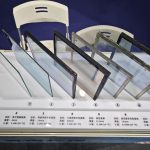
Leveraging advanced vacuum processes, SuperVIG® vacuum glass successfully compresses the heat transfer coefficient to just 0.45 W/㎡·K.
In an environment with a 20°C temperature difference, ordinary insulating glass transmits 28W of heat per square meter per hour into the interior, whereas SuperVIG® vacuum glass transmits only 9W.
This demonstrates the physical advantages of the vacuum structure in blocking heat transfer, providing a reliable solution for mitigating thermal bridging in buildings.
Data: Significant Reduction in Actual Cooling Load
In real-world application scenarios (taking a 100㎡ residence as an example, with a 30% window-to-wall ratio and 10 hours of daily AC usage):
- Ordinary Insulating Glass: Cooling demand peaks at 8,400W.
- SuperVIG® Vacuum Glass: Cooling demand drops to 2,700W.
Over a 180-day cooling season, this helps users reduce cooling energy consumption by 342,000W. This represents not only an optimization of data but a substantive contribution to the building energy consumption model.
Applications: The Premier Choice for High-Standard Projects
SuperVIG® vacuum glass complies with stringent energy-saving building standards, making it ideal for Passive Houses and high-end residential projects.
If you require detailed technical parameters, thermal calculation reports, or test data for SuperVIG® vacuum glass, please contact the VIG® technical team. We are ready to provide you with professional technical support.