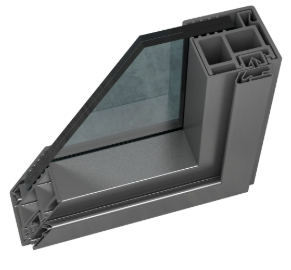
Stable Shaping: As the core supporting structure, its wall thickness, cavity design and material determine the final wind‑resistance and deformation‑resistance capacity of doors and windows.
Sealing Key: The sealing structure of profiles (such as multi‑chamber thermal‑break sections and gasket grooves) is the foundation for doors and windows to achieve excellent air‑tightness and water‑tightness performance.
Thermal‑Insulation Core: Profiles adopting thermal‑break design can effectively block heat transfer between indoor and outdoor through frames, which is critical to improving the overall thermal insulation performance of windows.
Scenario Adaptation: The most suitable profile system can be selected according to local climatic conditions of projects (e.g. severe cold, high temperature, heavy rainfall, high wind pressure) and priority performance requirements.
Four Major Application Scenarios
01 Household Appliance & Cold Chain
Eliminate condensation, starting with glass doors.
Applications: freezer doors, display cabinet doors, wine cabinet doors, frozen cabinet doors.
02 Building Energy‑saving
Meets passive‑house energy‑saving standards.
Applications: system windows & doors, curtain walls, passive houses, sunrooms.
03 Transportation
Simultaneous noise and thermal insulation.
Applications: high‑speed rail carriages, automotive glazing.
04 Agricultural Facilities
Preserve heat while maintaining light transmission.
Applications: greenhouses, agricultural installations, energy‑saving covering systems.